Fractures of the distal radius, near the wrist, are among the most common orthopedic injuries. Whether it’s due to a slip and fall, a sports injury, or an accident, these fractures can disrupt daily life and mobility. When conservative treatments like casts or splints don’t suffice, orthopedic surgeons may opt for surgical fixation. Among the surgical options, distal radius plates are widely used. But when exactly are they recommended? Let’s explore the key scenarios where these specialized implants come into play and why they’re a go-to choice for restoring wrist function and structure.
Understanding the Role of Distal Radius Plates
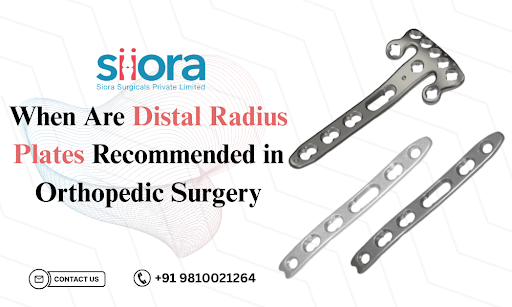
Distal radius plates are orthopedic implants, typically made of stainless steel or titanium, that are used to stabilize broken bone fragments in the wrist. They’re fixed to the bone with screws, holding everything in place so the fracture can heal properly. These plates come in various designs, volar, dorsal, and fragment-specific types, depending on the fracture pattern and surgical approach.
Now, plates aren’t always necessary. In fact, many wrist fractures heal well with non-operative treatment. But certain types of fractures or patient conditions call for something more stable, and that’s where these plates shine.
Unstable or Displaced Fractures
One of the most common reasons for recommending a distal radius plate is fracture instability. When the broken bone fragments don’t align correctly or are prone to moving out of place, surgery with a plate helps secure the alignment. Displaced fractures are where the bone ends have shifted apart, which can cause poor healing if not treated with precision. The plate acts like an internal splint, allowing the bone to heal in its correct anatomical position.
Comminuted Fractures (Multiple Bone Fragments)
In cases where the bone is shattered into multiple pieces, known as a comminuted fracture, traditional casting is often insufficient. The fragments can move unpredictably, leading to deformity or limited wrist motion. A distal radius plate offers multiple screw options to hold these tiny pieces together, which is crucial for achieving a stable reconstruction.
Intra-articular Fractures
Some distal radius fractures extend into the joint surface. These are more complex because if the joint surface isn’t restored perfectly, it can lead to long-term issues like arthritis or chronic pain. Distal radius plates help orthopedic surgeons realign the joint surfaces accurately and maintain that alignment throughout healing.
Failure of Conservative Treatment
Not every fracture responds well to non-operative care. Sometimes, a fracture initially treated with a cast shifts during the healing process, or healing doesn’t progress as expected. In such cases, surgeons may recommend converting to surgical treatment using a distal radius plate to ensure a better outcome.
High-Demand Patients or Early Mobilization Needs
For individuals with active lifestyles or those who need to return to work quickly, think athletes, laborers, or elderly patients trying to maintain independence, early mobilization of the wrist is vital. Distal radius plates provide the rigid fixation necessary to start gentle wrist movements earlier than casting would allow. This reduces the risk of stiffness and speeds up functional recovery.
Open Fractures or Associated Soft Tissue Injuries
When a distal radius fracture is open (where the bone breaks through the skin) or associated with ligament injuries or carpal bone dislocation, surgical fixation becomes almost mandatory. Plates help stabilize the fracture while allowing surgeons to repair surrounding soft tissue structures simultaneously.
Final Thoughts
Choosing to use a distal radius plate isn’t a one-size-fits-all decision. It’s based on the type and complexity of the fracture, the patient’s health status and lifestyle, and the need for quick recovery. When used appropriately, these locking plates offer excellent outcomes, restoring wrist strength, range of motion, and normal function.
 siiora surgicals pvt. ltd